
Global Plastics Treaty
Toward a legally binding international agreement to end plastic pollution
The world has agreed to end plastic pollution. All actors must now do their part to deliver on this promise, starting right now.”
Inger Andersen
Executive Director, UNEP
We believe in a just transition. Everybody should be included and nobody left behind. We want to make sure that we can eradicate poverty as part of sorting out this problem. We need to look at the most vulnerable people (the poorer, women, and people with disabilities, etcetera). In South Africa, we move together with everyone.
Dion Travers George
Minister of Forestry, Fisheries and Environment, Department of Forestry, Fisheries and Environment of South Africa
We have an opportunity now with the Treaty. We need to change the narrative to the creation of jobs, because I believe that a predictable world is going to allow companies to invest in new materials but also new practices, such as refill and reuse practices. So, all of this is economic value creation, the right thing to do, and it’s good for the economies.
Hein Schumacher
CEO, Unilever (Jul 2023-Mar 2025)
We need a Treaty, because if we don’t have clear rules, then we don’t have clear guidance for the private sector. In Mexico, we are demonstrating that, when you have clear rules, the private sector comes in, and they really invest. In Mexico City, for example, with the Systemic Change Scenario included in the Plastics Action Roadmap, we are projecting to replace 53% of current generated plastics by 2040, with clear guidance.
Alicia Bárcena Ibarra
Secretary of Environment and Natural Resources, Secretariat of Environment and Natural Resources of Mexico
There are three points that are important for us: first, predictability of the regulatory framework; second, a technology agnostic approach for regulation; and third, less ideology and more pragmatism in the regulatory framework.
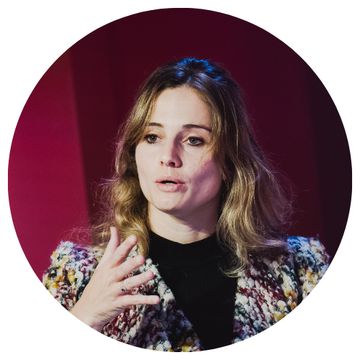
Sarah Lamaison
Co-Founder & CEO, Dioxycle
Beyond getting together and having good intentions, let's set a timeline and meet the goals set. Otherwise, this is going to be a vicious never-ending cycle.
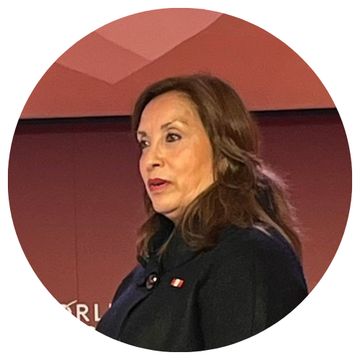
Dina Ercilia Boluarte
President of Peru
Our Programme at INC-5.2
Beating Plastic Pollution: Solutions Day
Sunday, 3 August 2025
To mark the start of negotiations, we hosted an in-person event spotlighting scalable solutions, inclusive financing, and national strategies—aimed at informing the treaty process and accelerating local action through collaboration.
New Agreement on Plastics: What Will It Take?
At the World Economic Forum Annual Meeting 2025 in Davos, we convened a high-level panel featuring UNEP Executive Director, Secretary of Environment and Natural Resources of Mexico, CEO of Unilever, Minister of Forestry, Fisheries and Environment of South Africa, and Co-Founder & CEO of Dioxycle.
Closing message from the President of Peru: The treaty must include clear means of implementation across the full plastic life cycle.
Concluding a Global Plastics Treaty at INC-5.2: What’s Needed?
At the 2025 UN Ocean Conference in Nice, we convened a high-level session to build momentum toward a strong outcome at INC-5.2.
The session was opened by the Minister of Environment of Uruguay and brought together leaders from across government, business, and civil society.
Speakers included Chairman and CEO of SC Johnson, Co-Founder & Co-CEO of Notpla, Global Advocacy lead of Fortescue and the Minderoo Foundation, and Ambassador from the French Foreign Affairs Ministry.
They called for clear, binding global rules that apply to all businesses, enable innovation, and offer regulatory certainty.
The entire world is watching us, and we need to use this opportunity to solve the plastic crisis.
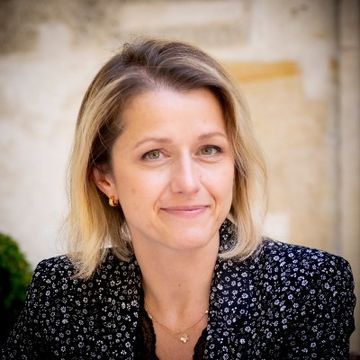
Barbara Pompili
Ambassador, Ministère des Affaires étrangères français, France
We are looking forward to a strong agreement with strong regulations. Number one priority of the treaty should be to prevent environmental leakage.
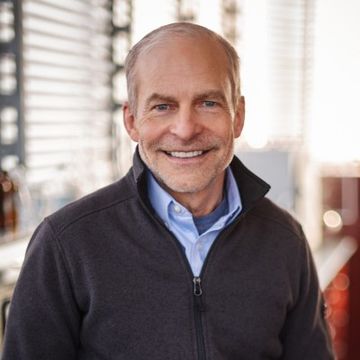
H. Fisk Johnson
CEO, SC Johnson
Extended Producer Responsibility (EPR) funds should also support innovation.

Pierre-Yves Paslier
Co-founder & Co-CEO, Notpla