Tanzania
Tanzania has been addressing plastic pollution since its 2019 ban on single-use plastic bags, and is continuing to work towards a clean environment free from plastic pollution.
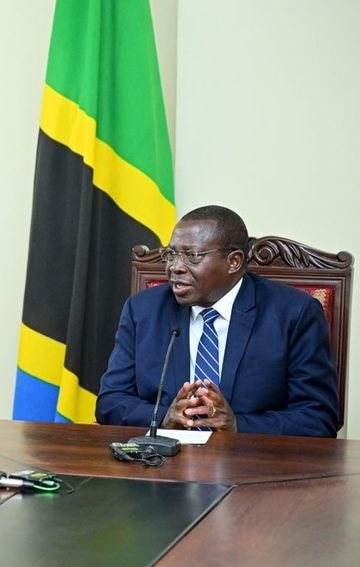
We need a planet earth which is clear of hazardous plastic waste.
H.E Dr. Philip Mpango
Vice President of Tanzania
Tanzania joins the Global Plastic Action Partnership
The Tanzania National Plastic Action Partnership (NPAP), established in August 2024, represents a significant step toward addressing plastic waste and its environmental impact. This partnership will enable Tanzania to implement innovative solutions tailored to its specific challenges, involving key stakeholders across the government, private sector, civil society, and local communities to create a circular economy for plastics.
The establishment of the NPAP is particularly critical for protecting Tanzania’s marine environment, which faces mounting pressures from plastic waste that threatens marine life, fisheries, and coastal livelihoods. Tanzania’s coastline along the Indian Ocean is home to diverse marine species and supports essential economic activities, including tourism and fishing.
The National Plastic Action Partnership Tanzania
NPAP Tanzania is a multi-stakeholder initiative established through a partnership between the Government of Tanzania and the World Economic Forum’s Global Plastic Action Partnership.
It provides a collaborative and neutral platform to unite stakeholders from government, business, academia, international organizations, and civil society to accelerate the country’s transition toward a circular plastics economy and reduce plastic pollution.
By fostering knowledge exchange, promoting inclusive solutions, and driving impactful policies, NPAP Tanzania ensures that the transition benefits all and leaves no one behind.
Multi-stakeholder Engagement
NPAP Tanzania brings together diverse stakeholders through two dedicated task forces: the Metrics Advisory Group and the Gender Equality and Social Inclusion (GESI) Task Force.
Together, these groups provide technical guidance for the National Roadmap and the GESI Report, ensuring that solutions to plastic pollution are both data-driven and inclusive.

Metrics
Task Force
A technical group of local experts from 54 organizations, providing insights into Tanzania’s plastic ecosystem and reviewing data to model the status of plastic waste.

Gender Equality and Social Inclusion (GESI) Task Force
A social focus group that contributes to the GESI Report, offering perspectives on the realities of marginalized groups and ensuring solutions are inclusive and representative of those most affected by plastic pollution.
2024
August | Tanzania joins GPAP
Signing of the Memorandum of Understanding between the Vice President’s Office and the World Economic Forum.
2025
May | Establishment of the NPAP Secretariat
The Tanzania NPAP Secretariat was established, hosted by UNDP Tanzania.
May | Establishment of the Metrics Advisory Group (MAG) Task Force
The MAG was formed along with the inaugural meeting.
July | Establishment of the Gender Equality and Social Inclusion (GESI) Task Force
The GESI Task Force was established with its first meeting.
September | Launch of NPAP Tanzania and its Steering Committee
The official launch of NPAP Tanzania, marked by the establishment of its Steering Committee._ _________