Gabon
Promoting sustainable growth while protecting natural heritage
Launch of the Gabon National Plastic Action Partnership
Led by the Government of Gabon, in collaboration with the Global Plastic Action Partnership (GPAP), the United Nations Development Programme (UNDP), the UK Government and national stakeholders, Gabon officially launched its National Plastic Action Partnership (NPAP).
NPAP Gabon brings together government, business, civil society and academia to advance national efforts to tackle plastic pollution and accelerate the transition to a circular plastics economy.
As a first step, the partnership is developing a national plastics baseline and exploring future scenarios to better understand plastic flows, identify key challenges and assess opportunities to reduce plastic pollution and improve circularity.
These findings will inform the development of a nationally owned Plastic Action Roadmap, setting shared priorities for policy action, investment and innovation.
By combining data-driven insights with cross-sector collaboration, NPAP Gabon aims to accelerate coordinated action on plastic pollution while supporting the country's broader ambitions for environmental protection, sustainable economic development and circularity.
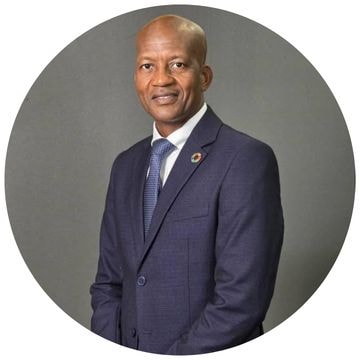
The ambition of Gabon is to build, by 2030, a model in which plastic is better designed, better collected and better recovered, without ever reaching our ecosystems. This is precisely the whole purpose of NPAP Gabon: to embody this commitment through a rigorous, comprehensive and resolutely action-oriented approach.
H.E. Maurice Ntossui Allogo
Minister for Water and Forests, Environmental Preservation, Climate and Human-Wildlife Conflict, Gabon