
GPAP at the 2025 Basel, Rotterdam and Stockholm Conventions COPs
Our Highlights | 28 April - 9 May, Geneva, Switzerland
Unleashing Circularity Through the Basel Convention
Multi-stakeholder dialogue on circularity and the Basel Convention, hosted by the World Economic Forum and opened by:
- Clemence Schmid, Director, Global Plastic Action Partnership, World Economic Forum
- Paul Hagen, Principal, Beveridge & Diamond
- Nazia Habib, Professor and Director, University of Cambridge
- Kimberley Botwright, Head, Sustainable Trade, World Economic Forum
This high-level dialogue brought together over 50 leaders from government, business, civil society, academia, and international organizations. Discussions focused on how the Basel Convention can accelerate the circular transformation of industries, what multi-stakeholder action is needed to strengthen BRS implementation, and how to ensure alignment with emerging frameworks like the Global Plastics Treaty.
Innovative Reuse Facility Site Visit
Co-organized with the Government of Switzerland and in partnership with the Canton of Geneva, this field visit welcomed ministers, private sector leaders, and academics from across the world to the ProP reuse facility operated by Groupe SERBECO.
This pioneering industrial site demonstrates how large-scale dishwashing and reuse systems can help cities reduce waste, create green jobs, and deliver both environmental and economic benefits.
Ministerial Reuse Panel
Following the reuse facility site visit, GPAP co-hosted a high-level panel exploring how policy can unlock investment in circular solutions.
The discussion emphasized how local innovation, when connected to international policymaking, can drive global impact — particularly in the context of a Global Plastics Treaty.
Speakers included:
- Katrin Schneeberger, State Secretary and Director, Swiss Federal Office for the Environment (FOEN)
- Ileana Villalobos Estrada, Undersecretary of Environmental Regulation, Ministry of Environment and Natural Resources, Mexico
- Jeannette Morath, Founder & CEO, reCIRCLE
- Elise Beaufils, Deputy Head of Sustainability Research, Lombard Odier Investment Managers
- Jodie Roussell, Global Public Affairs Lead, Packaging and Sustainability, Nestlé
- Clemence Schmid, Director, Global Plastic Action Partnership, World Economic Forum
High-Level Ministerial Dinner
GPAP was honoured to join a high-level ministerial dinner hosted by the Swiss Federal Office for the Environment (FOEN), with over 80 leaders including ministers and heads of international organizations.
The programme centred on one shared priority: eliminating pollution to protect human and planetary health.
We delivered a keynote spotlighting the World Economic Forum's Global Risks Report 2025, which ranks pollution as the sixth most severe risk in the next two years.
Speakers included:
- Katrin Schneeberger, State Secretary and Director, Swiss Federal Office for the Environment (FOEN)
- Inger Andersen, Executive Director, UN Environment Programme
- Rolph Payet, Executive Secretary, The Basel, Rotterdam and Stockholm Conventions Secretariat
- Sebastian Buckup, Managing Director, Centre for Nature and Climate, World Economic Forum
Facilitating Global Circularity of Plastic Feedstock with Standardized, Verified and Trusted Trade Procedures
Moderated by GPAP and co-hosted by the Ocean Recovery Alliance and World Plastics Council, this panel addressed how harmonizing the Basel Convention and Global Plastics Treaty can enable trusted, standardized trade in recycled plastics.
Key themes included the need for clear definitions, efficient procedures, and transparent tracking systems to accelerate circularity at scale.
Speakers included:
- Douglas Woodring, Founder & Managing Director, Ocean Recovery Alliance
- Benny Mermans, Chairman, World Plastics Council; Vice President Sustainability, CPCHEM
- Carlos Silva, Former President, International Solid Waste Association (ISWA)
- Timo Unger, Chemical Compliance, Circular Economy and Digital Product Passport, Hyundai
- Jeet Kar, Lead, Policy and Sustainable Trade, World Economic Forum
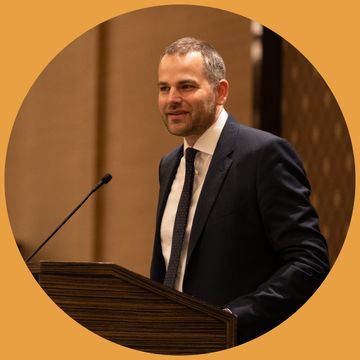
Collective action is the most powerful antidote to complex risks.
Pollution may be invisible, but our actions are not. The Forum remains committed to complementing the essential work of the BRS Conventions and other global frameworks by bridging ambition and implementation — across sectors, borders, and agreements — to shape a healthier, more equitable future.
Sebastian Buckup
Managing Director, Centre for Nature and Climate, World Economic Forum
What are the BRS Conventions?
Adopted between 1989 and 2001, the BRS Conventions are three closely related legally binding international agreements designed to protect human health and the environment from hazardous chemicals and waste.
- Basel Convention — Controls the transboundary movement of plastic waste.
- Stockholm Convention — Eliminates or restricts hazardous chemicals, including those found in plastics.
- Rotterdam Convention — Ensures informed consent for trade in hazardous substances.
The BRS COPs convene every two years to align global efforts and advance multilateral action on waste and chemical pollution.
Looking Ahead: INC-5.2
The BRS Conventions are closely linked to the upcoming Global Plastics Treaty — forming the backbone of international efforts to end plastic pollution.
The final round of treaty negotiations (INC-5.2) will take place from 5–14 August 2025 in Geneva, Switzerland.
GPAP remains committed to convening diverse voices and supporting the process through high-level dialogue on topics like financing, innovation, trade policy, and social inclusion.