
GPAP at the World Economic Forum Annual Meeting 2025
Our Highlights | 20 - 24 January, Davos, Switzerland

Reaching this 25-nation milestone is not just a celebration of numbers, it’s a testament to the growing global determination to tackle one of the world’s most pressing challenges. These partnerships are not just symbolic, they represent concrete commitments to rethinking how plastics are produced, managed and reused. Together we are charting a path towards a circular plastics economy that benefits people and planet.
Clemence Schmid
Director of GPAP, World Economic Forum
Announcement: Panama Plastic Action Roadmap
New Agreement on Plastics: What Will It Take?
As countries are set to conclude negotiations for a global treaty to end plastic pollution in 2025, GPAP convened a high-level panel to outline key priorities.
The discussion, opened by UNEP Executive Director, featured the Secretary of Environment and Natural Resources of Mexico, the CEO of Unilever, the Minister of Forestry, Fisheries and Environment of South Africa, and the Co-Founder & CEO of Dioxycle.
Closing the panel, the President of Peru emphasized the need to define clear means of implementation for a future plastics treaty across lifecycle of plastics.
The world has agreed to end plastic pollution. All actors must now do their part to deliver on this promise, starting right now.”

Inger Andersen
Executive Director, UNEP
We believe in a just transition. Everybody should be included and nobody left behind. We want to make sure that we can eradicate poverty as part of sorting out this problem. We need to look at the most vulnerable people (the poorer, women, and people with disabilities, etcetera). In South Africa, we move together with everyone.
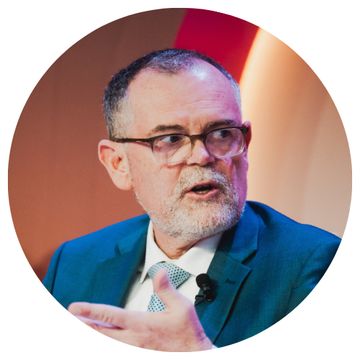
Dion Travers George
Minister of Forestry, Fisheries and Environment, Department of Forestry, Fisheries and Environment of South Africa
We have an opportunity now with the Treaty. We need to change the narrative to the creation of jobs, because I believe that a predictable world is going to allow companies to invest in new materials but also new practices, such as refill and reuse practices. So, all of this is economic value creation, the right thing to do, and it’s good for the economies.
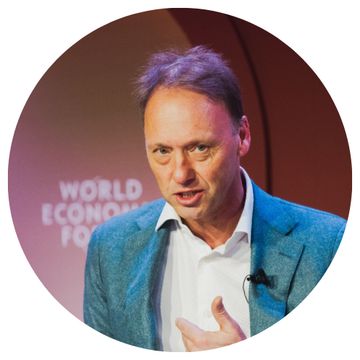
Hein Schumacher
CEO, Unilever
We need a Treaty, because if we don’t have clear rules, then we don’t have clear guidance for the private sector. In Mexico, we are demonstrating that, when you have clear rules, the private sector comes in, and they really invest. In Mexico City, for example, with the Systemic Change Scenario included in the Plastics Action Roadmap, we are projecting to replace 53% of current generated plastics by 2040, with clear guidance.
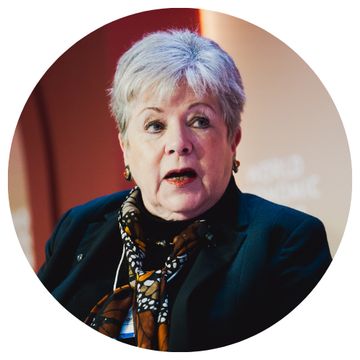
Alicia Bárcena Ibarra
Secretary of Environment and Natural Resources, Secretariat of Environment and Natural Resources of Mexico
There are three points that are important for us: first, predictability of the regulatory framework; second, a technology agnostic approach for regulation; and third, less ideology and more pragmatism in the regulatory framework.

Sarah Lamaison
Co-Founder & CEO, Dioxycle
Beyond getting together and having good intentions, let's set a timeline and meet the goals set. Otherwise, this is going to be a vicious never-ending cycle.
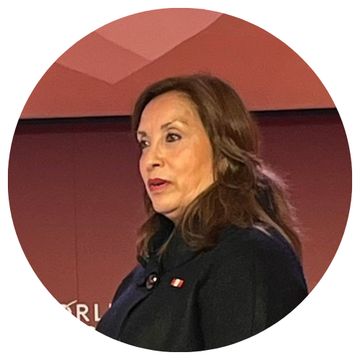
Dina Ercilia Boluarte
President of Peru
Plastic Waste to Feedstock: Fueling the Circular Economy
This session explored the challenges and opportunities in accessing and using plastic waste as a feedstock for recycling, necessary to advance circularity and packaging sustainability. Participants discussed the state of play on advanced recycling technologies, and much-needed trade and environmental policy interventions to ensure a stable supply of recycling feedstock, without undermining environmental safety.

Ministerial Dialogue on National Plastic Action
The session gathered global leaders to advance public-private collaboration in combating plastic pollution. They shared insights on how multistakeholder approaches have complemented government actions, explored strategies for effective national implementation of future Global Plastics treaty commitments, and identified leadership skills needed to craft impactful policies.