Paraguay
Plastic pollution extends beyond oceans. It poses a serious threat to freshwater ecosystems in landlocked nations as well.
Plastics travel through rivers and lakes, disrupting ecosystems, endangering wildlife, and degrading water quality.
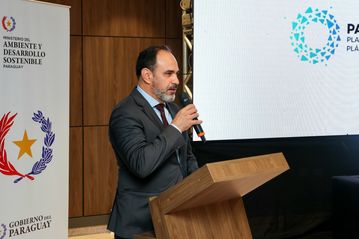
The National Plastic Action Partnership Paraguay will be a space where the government, the private sector, civil society, academia and other key actors will converge to implement transformational strategies at the national level. It represents an opportunity to move towards the circular economy of plastics in Paraguay.
Rolando Coronel
Chief of Staff, Ministry of Environment and Sustainable Development of Paraguay
Launch of the National Plastic Action Partnership
Paraguay is pioneering a comprehensive approach to addressing plastic pollution through its National Plastic Action Partnership (NPAP). This multisectoral platform launched in December 2024 brings together government, private sector leaders, informal economy stakeholders, civil society, and academia to collaborate across the plastic value chain.
The partnership focuses on fostering knowledge sharing, promoting innovative ideas, and exchanging best practices. Its ultimate aim is to drive effective actions that accelerate Paraguay’s transition to a circular and sustainable plastic system.
The NPAP Secretariat will be hosted by the Center for Environmental and Social Studies (CEAMSO), a nonprofit organization based in Asunción. CEAMSO will coordinate and support the implementation of the initiative within the country.
Preparing for the Global Plastics Treaty and beyond
Through this partnership, Paraguay is positioning itself as a model for other nations in combating plastic pollution.
The collaboration will also help prepare the country for the upcoming Global Plastics Treaty, ensuring that it can meet international commitments while driving local and regional change.
By fostering private sector engagement and implementing robust policy frameworks, Paraguay is laying a strong foundation for its transition to a circular economy.