
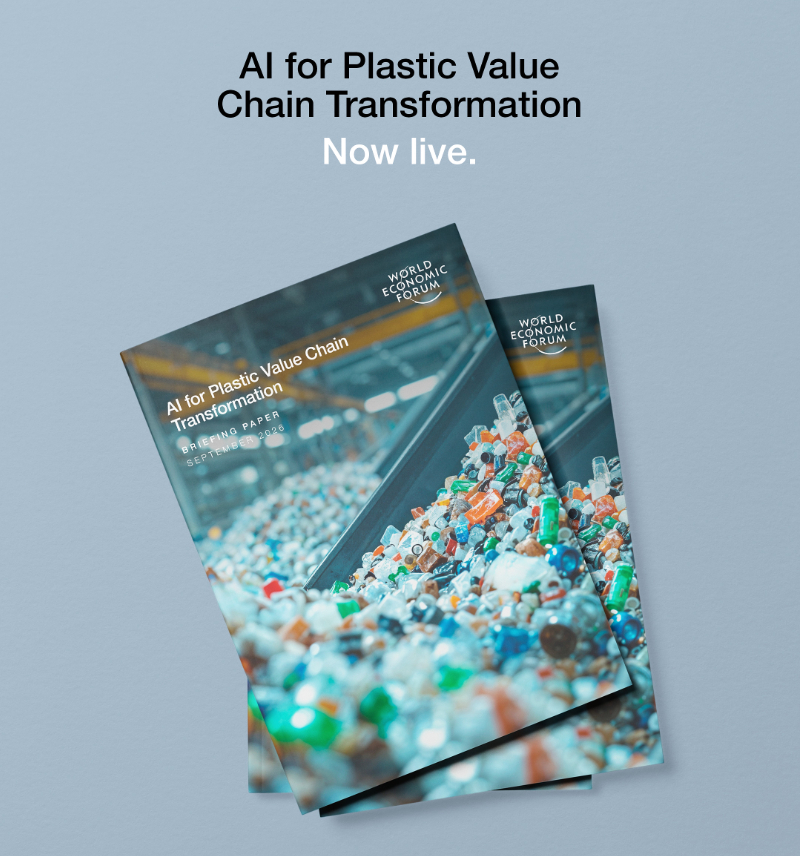
Plastic production has grown to more than 460 million tonnes a year, expanding nearly 40% faster than the global economy, yet less than 9% is ultimately recycled. A new generation of artificial intelligence (AI) tools is changing what is possible across the plastics value chain, allowing materials to be identified, traced, analysed and redesigned down to the molecular level in ways not previously possible.
This paper identifies four dimensions where AI has the greatest potential for transformation: design and materials, production and quality, collection and traceability, and recovery and value. Together, these capabilities could transform the economics of circular plastics while reducing pollution and emissions and improving human health outcomes, generating interconnected economic, social and environmental value – though technology remains only one of several levers needed, alongside infrastructure, policy, capital and consumer behaviour.
Produced by the World Economic Forum's Plastics Technology and Innovation workstream within the Circular Economy Transformation Initiative, the paper draws on real-world case studies of AI deployment across the lifecycle to provide a preliminary, high-level view of where value could be created.