
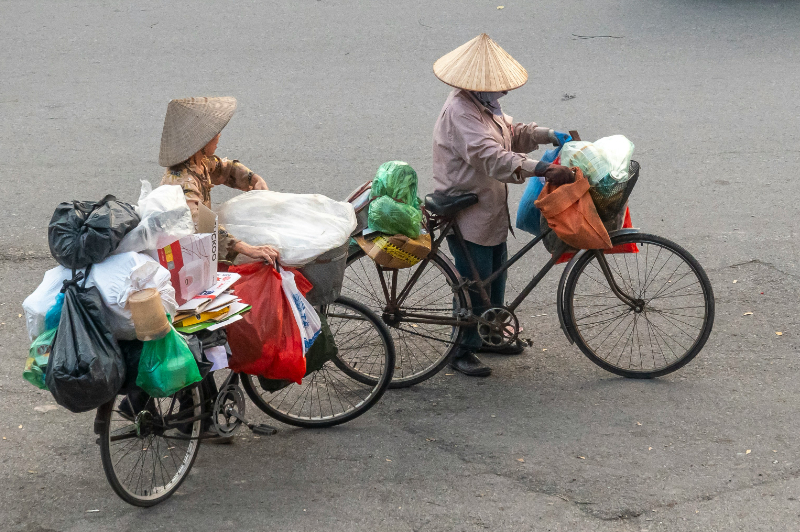
“The Plastic Reborn” program aims to build a community of 12,700 scrap collectors, a plastic waste collection and recycling system with a capacity of 80,000 tons per year, reducing emissions to 152 – 454 tons carbon into the environment every year by 2025. The program also contributes to promoting waste sorting at source in Hanoi, Ho Chi Minh City, and other provinces nationwide.
The program is honored to accompany Unilever, AEPW, and IUCN and get the response of international organizations such as UNDP, WWF, YOUNUS, NPAP to support and enhance the quality of life for disadvantaged female collectors in the collection system with the hope that they will receive honor and recognition as a major force in environmental protection.
Over the years, the program has supported female collectors with cleaning products, tools, and personal protective equipment and is making efforts to call for regulatory authorities and international organizations to join hands to deliver the favorable social security policy for them including health insurance, social insurance, etc., and improve their health and career awareness. We understand that this is a challenging and unstable profession, but it has a positive impact on the environment. Unilever has and will continue to support female waste collectors with safe and hygienic protective gear and training, while also helping to improve their livelihoods.
This ensures they are well-prepared to contribute to the growth of Vietnam’s recycling industry
VietCycle received funding from GPAP for a project focused on training, capacity building, and social welfare for informal waste collectors—the majority of whom are women. The project aims to enhance the skills of informal waste collectors (IWWs). With proper knowledge, the women working in this field will feel more confident and safer in their work.
The programme aims to build the capacity of (IWWs) by focusing on:
- Technical Skills in Waste Management: Training on effective collection, sorting, and recycling techniques.
- Market-Based Pricing Knowledge: Educating IWWs on how to price recyclables based on market trends.
- Basic Financial Skills: Providing financial literacy training tailored to small households.
- Communication Skills: Enhancing interpersonal and negotiation skills.
- Health & Safety Knowledge: Promoting safe working practices and awareness of health risks.
- Attitudes and Self-Confidence: Empowering IWWs to recognize their contributions and improve self-esteem.