Home
About
Countries
Roadmaps
Impact
News
Resources
Media
Contact us

Resources

Case studies

undefined
Just Transition
Indonesia National Plastic Action Partnership Report Launch
undefined
Just Transition
NPAP Indonesia Action Roadmap Bahasa
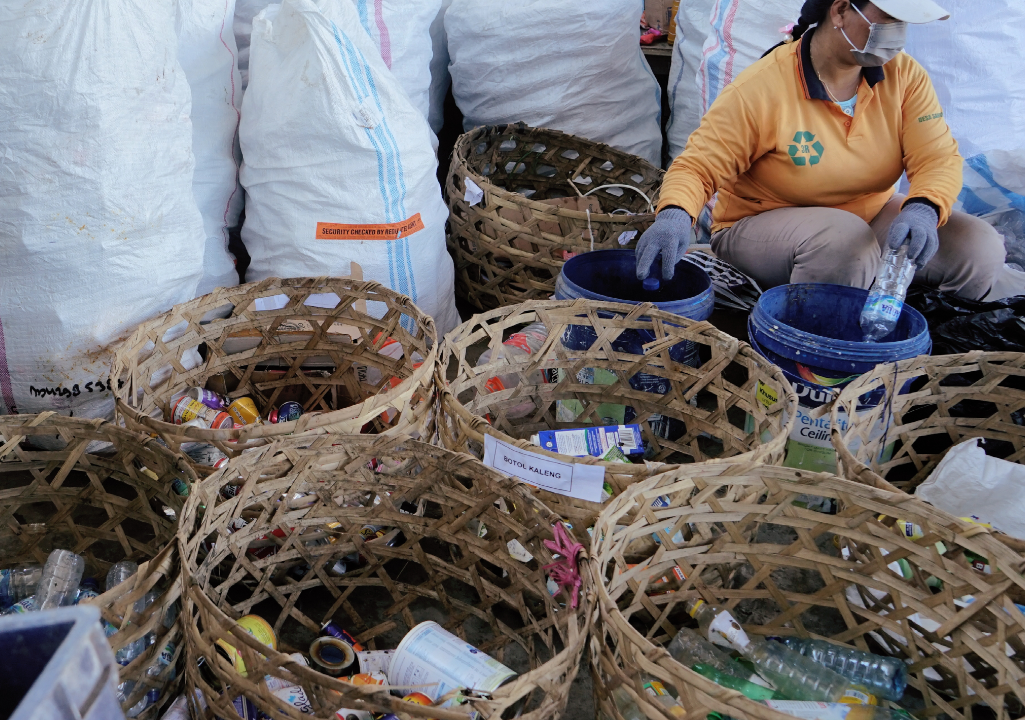
National Plastic Action PartnershipRecognizing the urgent need to take bold, unprecedented action on plastic pollution, the Government of Indonesia collaborated with the Global Plastic Action Partnership – a multistakeholder initiative set up by the World Economic Forum – to launch the Indonesia National Plastic Action Partnership (NPAP) in early 2019. This initiative complements many actions and initiatives currently underway in Indonesia to reduce plastic pollution, led by national and sub-national governments, businesses, academia, non-governmental organizations, community and religious groups – outlined further in Chapter 2.The NPAP supports Indonesia’s National Action Plan on Marine Debris, the Indonesian National Waste Management Policy and Strategy (Jakstranas and its subnational equivalent Jakstrada) and other efforts towards achieving a 70% reduction in the nation’s marine plastic debris by 2025.
Indonesia | Just Transition
Radically Reducing Plastic Pollution In Indonesia: A Multistakeholder Action Plan National Plastic Action Partnership
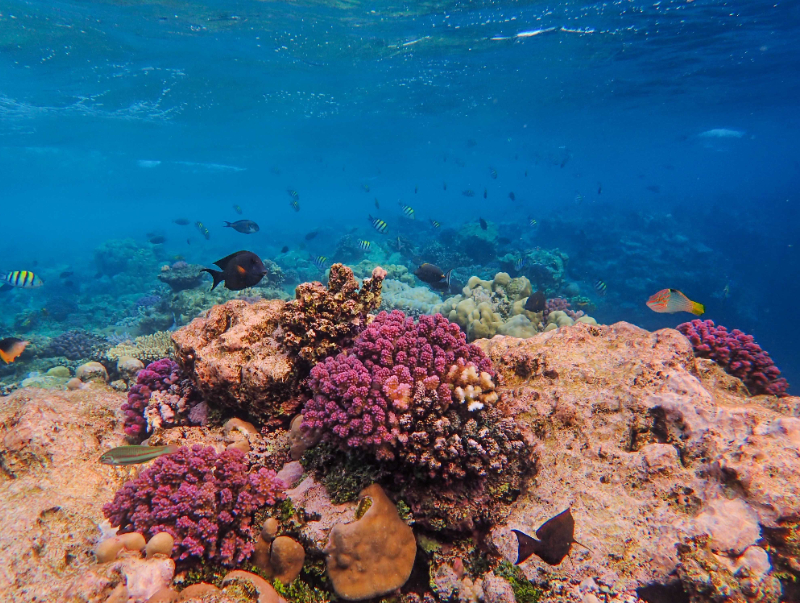
At a GlancePartners: The Philippines Department of Environment and Natural Resources (DENR), the Department of Energy (DOE), San Miguel Corporation, and Metro Pacific InvestmentsInvestment type: Public-private MOU for coordinated strategy and private resources and investmentKey business benefit: Supports Aboitiz’s climate, nature and SDG strategy and protects local economy around Aboitiz’s operation; reduces operational and reputational risk in a region of direct commercial exposureKey outcomes: MOU signed in May 2024 establishing public-private coordination to advance the stewardship of the Verde Island Passage; commitments include marine science research capacity, technical working structure for implementation, and low-carbon transition planning.The OpportunityThe Verde Island Passage (VIP) is one of the world's most important marine biodiversity corridors. Located between Batangas and Mindoro in the Philippines, it spans around 1.14 million hectares of coral reef, mangrove and seagrass habitats and is home to more than 1,700 marine species, including 60% of the world's shore fish species and more than 300 coral species. The passage supports fisheries, ecotourism, coastal protection, while also serving as a major commercial shipping channel and an area of strategic importance for industry and energy. Millions of people depend on the health of this ecosystem for livelihoods, food security and local economic activity.Given the importance of this biodiversity as well as the growing demand for resources from the Verde Island Passage, the Philippines Department of Environment and Natural Resources (DENR), the Department of Energy (DOE) and major private sector groups - including Aboitiz Equity Ventures, San Miguel Corporation and Metro Pacific Investments – looked to align public and private action around the protection of the VIP.The ApproachTo align public and private action, the Philippines DENR, DOE, Aboitiz Equity Ventures, San Miguel Corporation and Metro Pacific Investments signed on MOU to create a shared strategy for activities in the VIP. The partnership responds to a clear governance challenge: many public, private and local actors are already active in the Verde Island Passage. The agreement seeks to advance a whole-of-government and whole-of-society approach to conservation, biodiversity protection and responsible economic development in the corridor.Under the MOU, the participating companies and government agencies commit to support conservation and stewardship of the VIP's marine and coastal resources. Priorities include strengthening marine science and research capacity, supporting biodiversity research and development programmes, advancing habitat restoration and sustainable resource use, and aligning low-carbon transition objectives with environmental protection. The initiative also creates space for a technical working structure that can define roles, coordinate implementation and translate high-level commitments into concrete action.A central element of the model is the recognition that conservation and economic activity are interdependent. Mangroves, seagrasses and coral reefs provide natural protection, nursery grounds for fisheries and biodiversity value that underpin local livelihoods and tourism. Protecting these ecosystems is therefore not only an environmental objective, but a way to safeguard the economic base of communities and businesses operating in and around the passage.Value CreatedFor Aboitiz, the MOU aligns its climate, nature and SDG strategy with the health of the coastal economy it operates within. The Verde Island Passage illustrates how corporate capital can support a more regenerative ocean economy when it is aligned with public policy and ecological priorities. Mangrove-positive and biodiversity-positive action can reduce operational and reputational risk, and create opportunities for credible nature-related investment.For biodiversity and climate outcomes, the MOU creates commitments for science capacity, habitat restoration, sustainable resource use and low-carbon transition planning in a key biodiversity corridor.Why It Matters / Key TakeawaysThis case highlights the benefit of coordination across multiple conglomerates and government where industry exploration and biodiversity overlap. The partnership creates a public-private framework to protect the Verde Island Passage, align conservation with low-carbon transition planning, and mobilize corporate resources for biodiversity in a highly diverse marine corridor and is a model for such coordination in other areas. Relevant global targetsGlobal Biodiversity Framework Targets 2 (restoration), 11 (ecosystem services), 14 and 19 (mainstreaming and resource mobilisation), and 21 (knowledge and awareness) References1. Investing in Mangroves: The Corporate Playbook - World Economic Forum2. Loyzaga urges multisectoral effort on Verde Island Passage - Philippine Daily Inquirer3. Metro Pacific Investments Corporation joins forces in environmental MOU to safeguard the Verde Island Passage - MPIC
Philippines | Nature & Natural capital
Aboitiz: Public-private coordination in a highly biodiverse marine corridor
business Aboitiz Equity Ventures
The Costa Rica National Action Roadmap assesses the country's plastic ecosystem through a baseline analysis of current plastic consumption and waste management practices. The baseline analysis enables the modelling of future scenarios on plastic consumption up to 2040. There is a business-as-usual scenario which predicts a continuous rise in plastic pollution, and a system-change scenario, which envisions comprehensive and ambitious interventions throughout the entire plastics value chain. The report was developed with contributions from a wide range of stakeholders, including government, industry, recyclers, academia, and civil society.
Just Transition
Costa Rica Roadmap - Executive Summary
Boosting Circular Innovation
Eco Panplas and Ecolab
India’s agricultural sectors consumes close to 20 per cent of electricity in the country. However, in many parts of the country consumption of energy and water is hugely inefficient. This programme offers farmers to replace old pumps with modern energy efficient ones, which can save energy, and be operated by remote control thus only using water when really needed. 
India | Food & agriculture
Integrated Water and Energy Solutions for Irrigation in Rural India
This report is one of nine assessments examining the interlinkages between plastic pollution and biodiversity loss. The assessments map where plastic pollution has the greatest ecological impact, explore the economic and social interdependencies driving both pressures, and identify solutions across the plastics value chain. Each report reviews existing policy frameworks and provides actionable recommendations to address both biodiversity loss and plastic pollution while advancing circular economy approaches. The assessments were developed with contributions from a wide range of stakeholders, including government, industry, recyclers, academia and civil society.
Just Transition, Nature & Natural capital
Plastic Pollution and Biodiversity in Colombia: Pathways for Environmental and Economic Resilience
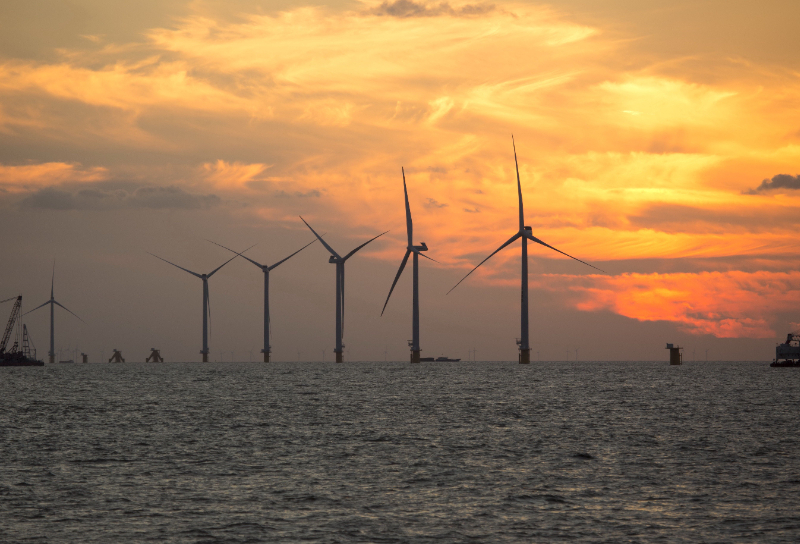
At a GlancePartners: Keelung Wild Bird Society; Maizailiao Cultural Association; Changhua Wild Bird Society; National Taiwan University; National Pingtung University of Science and TechnologyInvestment type: Direct investment in conservation programmeKey business benefit: Addresses the potential collision risks of offshore windfarms, complies with investor biodiversity standards, and supports Ørsted’s social license to operate.Key outcomes: Habitat restoration, monitoring, research and education in support of species and habitats adjacent to the windfarm. Data on the impact of the first two years of these interventions coming in early 2027.The OpportunityThe waters and coast off Changhua County, Taiwan, are home to several species of special conservation status, including the critically endangered Taiwanese Humpback Dolphin, the endemic Taiwan picnic seabream, and the vulnerable Black-faced spoonbill as well as a plethora of other marine mammals, fishes, and birds. Changhua County also has the largest wind energy capacity of any county, municipality or city in Taiwan. In preparing the Greater Changhua Offshore Wind Farm, Ørsted aimed to address the potential impacts of windfarm operations in a highly biodiverse corridor, recognising the importance of coordination across stakeholders and opportunity to meet biodiversity goals in doing so.The ApproachIn developing the Greater Changhua Offshore Wind Farm, Ørsted undertook a Critical Habitat Analysis and Cumulative Impact Assessment for this project, per Equator Principles to manage environmental and social risks required by the project’s investors. Having identified critical habitats and impacts through these assessments, a Biodiversity Action Plan (BAP) was then created to identify actions for the marine mammals, fishes, and birds and their associated habitat to ensure a net gain for species and no net loss of natural habitats.As outlined in the BAP, Ørsted collaborates with other Taiwanese offshore windfarm developers, researchers, NGOs, regulators and cross sector partners to monitor and evaluate impacts on migratory seabirds and bird species with significant collision risks as well as marine fauna to identify if additional management measures are required. Baseline data were collected in 2025.Ørsted has also engaged in habitat restoration and enhancement for wading bird species and seabird species identified in the BAP as having critical habitat or significant collision risk. For example, on Mianhua Islet, Ørsted has installed artificial nesting burrows for the Streaked Shearwater with the Keelung Wild Bird Society. At the Zhuoshui River estuary, Ørsted is restoring abandoned fishponds to coastal wetland with the Maizailiao Cultural Association. With the Changhua Wild Bird Society, Ørsted monitors EAAF (East Asian-Australasian Flyway) migratory raptor roosts. Further actions include education, stakeholder engagement and academic research on critical habitat, supported by National Taiwan University and National Pingtung University of Science and Technology.Value CreatedFor Ørsted, the actions taken in Greater Changhua provide an offset to identified collision risk from the windfarm while also increasing social license to operate both with the local community as well as globally. Ørsted also sees a learning value in its work in through Greater Changhua as it continues to strive toward its 2030 biodiversity commitment and engage across multiple types of seascapes.For biodiversity outcomes, Ørsted has a goal for creating gains for species and habitat in the Greater Changhua cluster. Robust restoration and habitat enhancements coupled with monitoring and evaluation will provide quantitative and qualitative data for tracking biodiversity outcomes through time, with first data to verify impact to be reported in early 2027.Why It Matters / Key TakeawaysThis case demonstrates the biodiversity benefit of investor standards supporting corporate biodiversity action and strong implementation for net gain for species and habitat as set by Ørsted. Further, given the density of wind development in the area, the coordination across stakeholder, including other Taiwanese offshore windfarm developers, researchers, NGOs regulators and cross sector partners ensures coordinated monitoring, research, and adaptive management for achieving species and habitat targets not possible with these stakeholders acting in isolation.Relevant global targetsGlobal Biodiversity Framework Targets 2 (restoration), 4 (species recovery), 15 (business assessment of biodiversity impacts), 21 (knowledge and data)ReferencesGreater Changhua Southwest Offshore Windfarm in Taiwan Biodiversity Action Plan. June 2025Greater Changhua Southwest Offshore Wind Farm in Taiwan Critical Habitat Assessment 16 May 2025Her, Kelly (1 January 2017). "Fair Winds". Taiwan Today. Archived from the original on 3 March 2017.Ørsted Wins Taiwan Biodiversity Action Award Silver for Second Consecutive Year Demonstrating the Coexistence of Renewable Energy and NatureØrsted Awarded Silver at 2025 Taiwan Biodiversity Action Awards — First Offshore Wind Developer Recognized for Marine Ecosystem Conservation
Taiwan, China | Energy, Nature & Natural capital
Ørsted: Pairing offshore wind development with marine and coastal species habitat restoration
business Orsted

Global Plastic Action Partnership

A World Economic Forum Initiative
About Countries Roadmaps Impact News Resources Media Contact us
© 2026 All rights reserved
Privacy Policy & Terms of Service